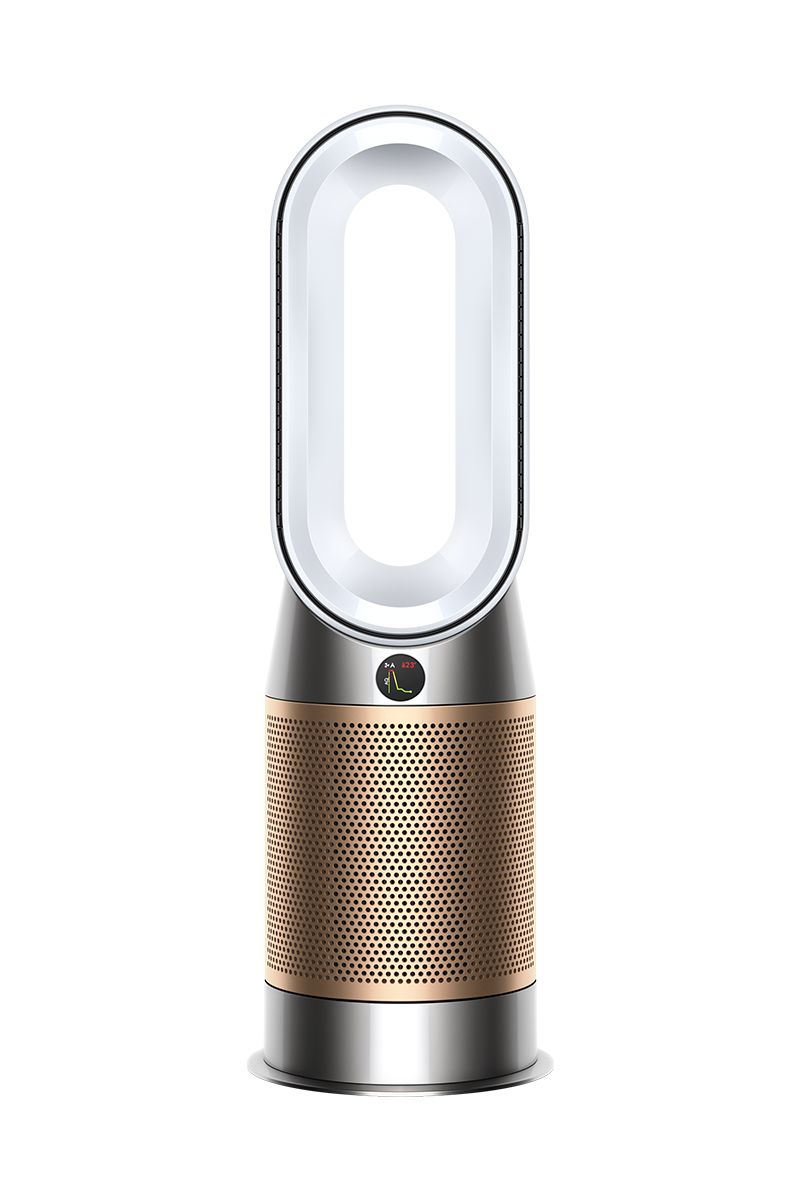


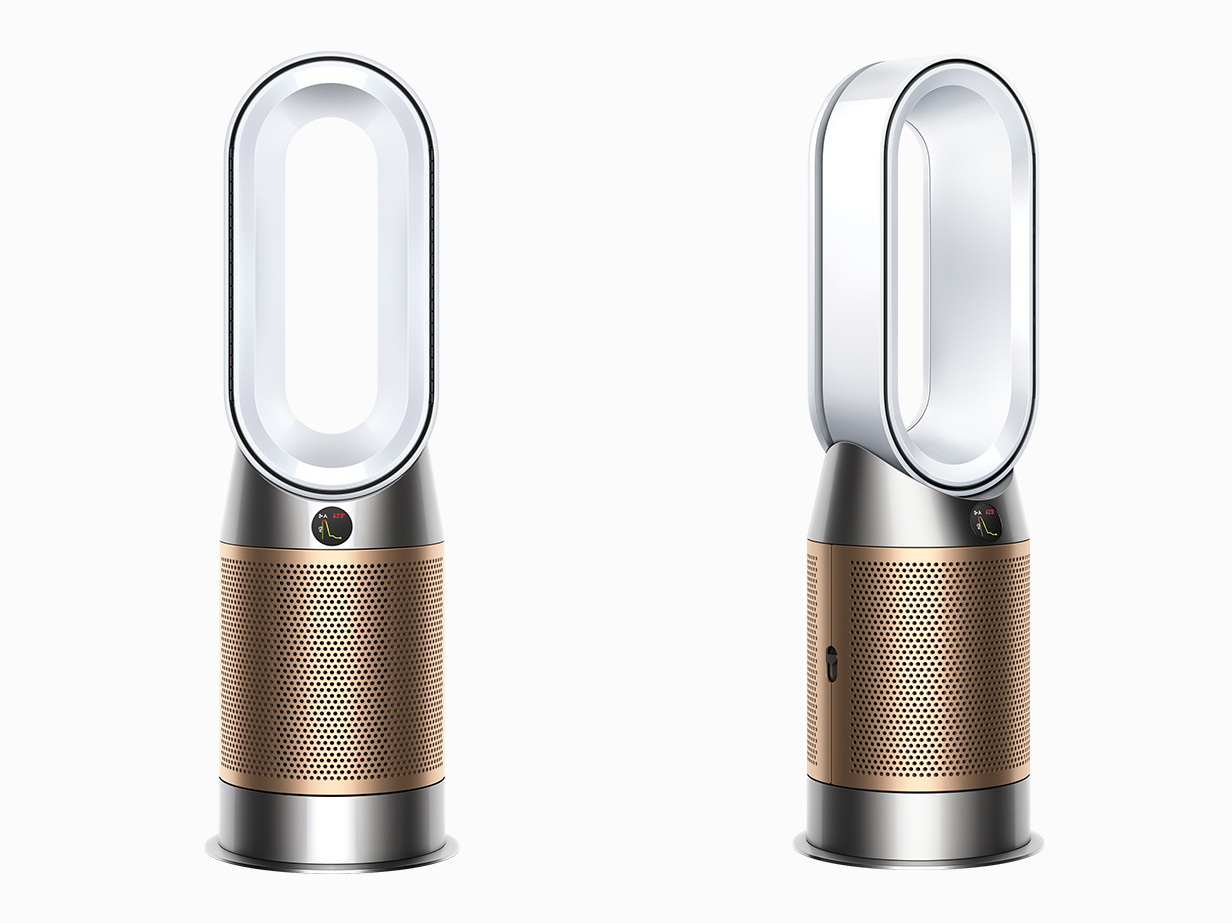
Dyson Purifier Hot+Cool HP2 De-NOx (White/Gold)
Advanced air purification automatically captures 50% more NO₂.±
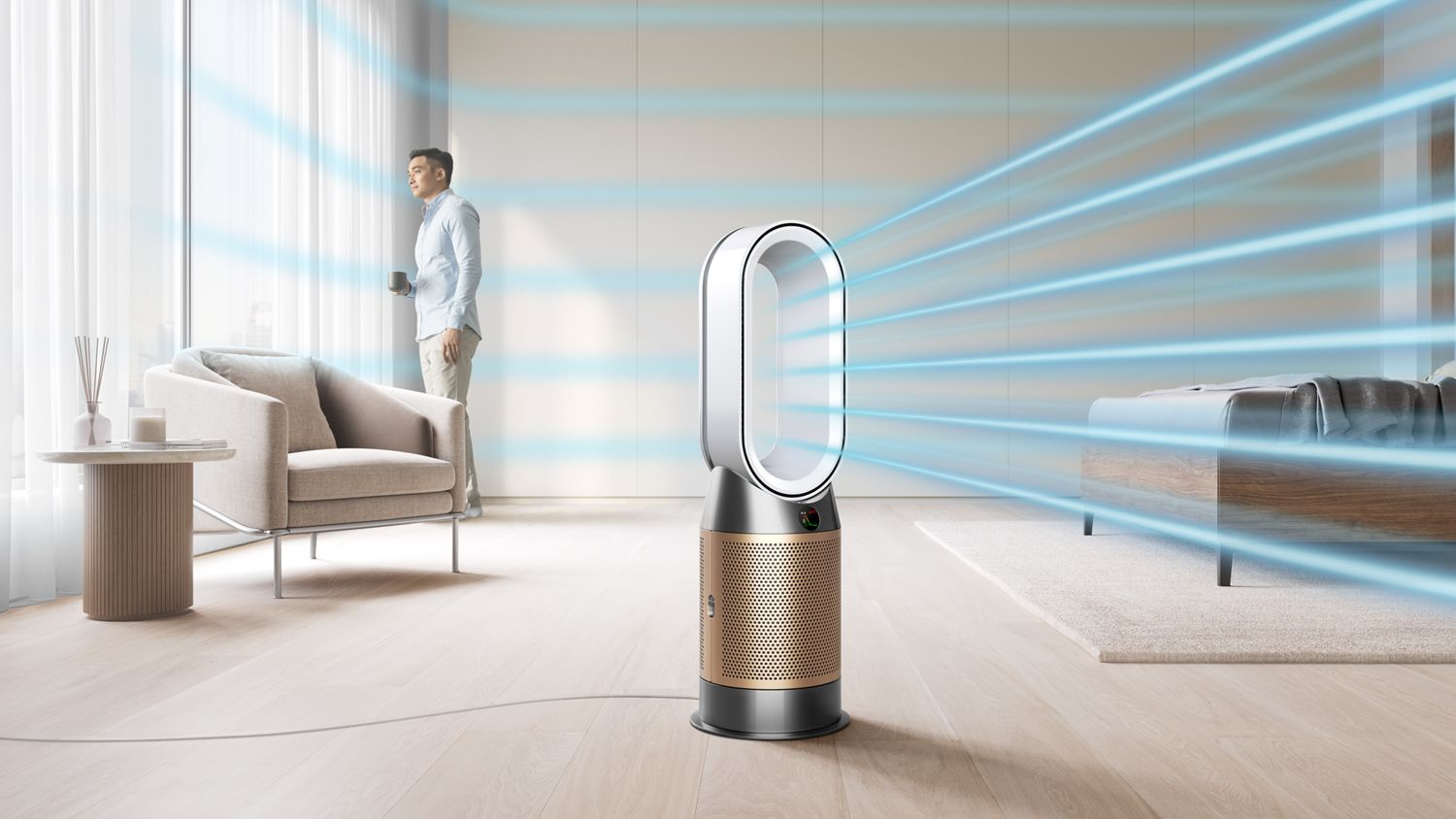
• Purifies and heats the whole room evenly.¹
• Cools you³ in summer.
Fully sealed, 3-stage HEPA H13 grade filtration captures 99.97% of particles as small as 0.3 microns.2
Removes odors and gases2, and continuously destroys formaldehyde.⁺
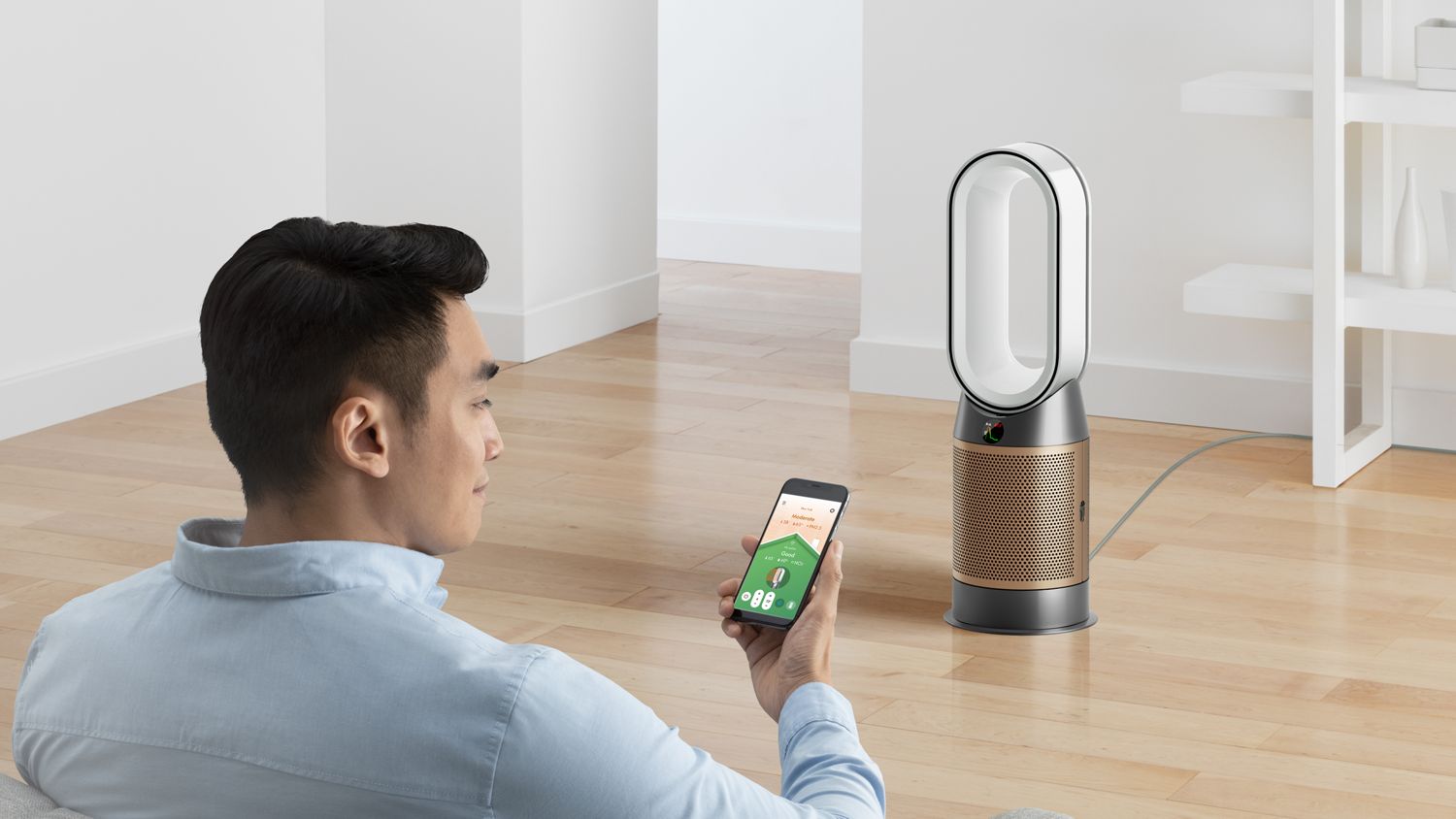
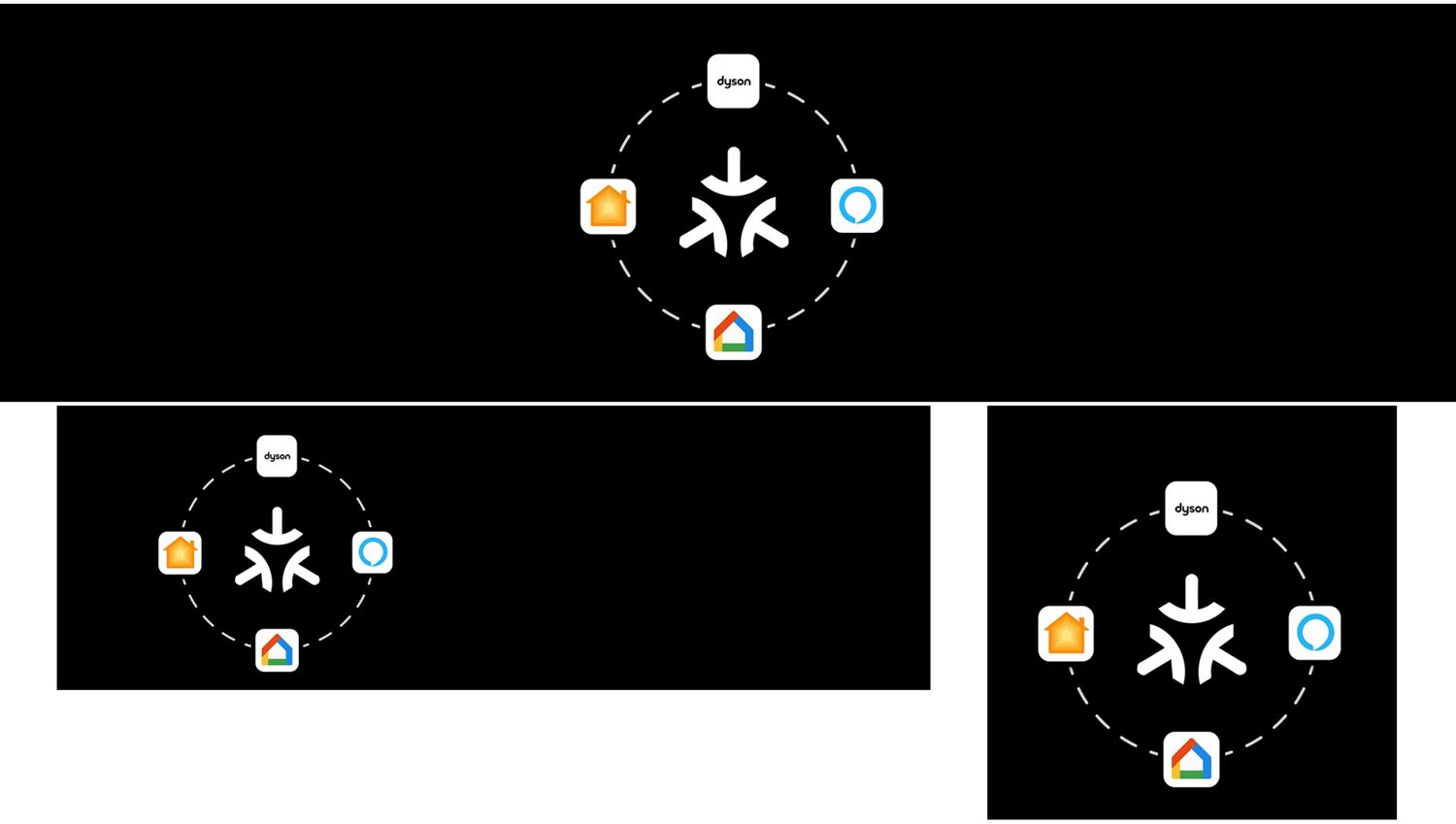
Control and monitor air quality from anywhere using the MyDyson™ app, or hands-free with compatible voice services.5
Set schedules and receive personalized air quality reports via the MyDyson™ app.5
Specifications
-
Weight
5.7 kg
-
Sound level (Max)
56 dBA
-
Sound level (Quiet Mode)
38 dBA
-
Oscillation/Angle
350 degrees
-
Cord length
1.8 m
-
Room coverage
81m³ (according to POLAR)
-
Filter life
1 year for HEPA+K-Carbon filter
-
Sound level
63 Decibel
-
Product diameter (skirt)
248 mm
-
Product diameter (shrouds)
220 mm
-
Min/Max Power consumption
<0.5W
-
Height
764 mm
-
Width
248 mm
QUEBEC CONSUMERS – Availability of Replacement Parts, Repair, and Maintenance Information
Dyson strives to make replacement parts, repairs, maintenance, and troubleshooting available for your Dyson machines. However, due to instances where items may be out of stock or continued availability may be limited, Dyson does not guarantee the availability of these items within the meaning of Section 39 of the Quebec Consumer Protection Act.
Please see Quebec Maintenance Information page for additional information on the availability of Spares and Accessories, Troubleshooting Assistance and User Manuals, and Repair Services.


.png "Flexible payment options")

Reviews powered by Bazaarvoice
Dyson Purifier Hot+ Cool HP2 De-NOx (White/Gold)
Overall rating
In the box
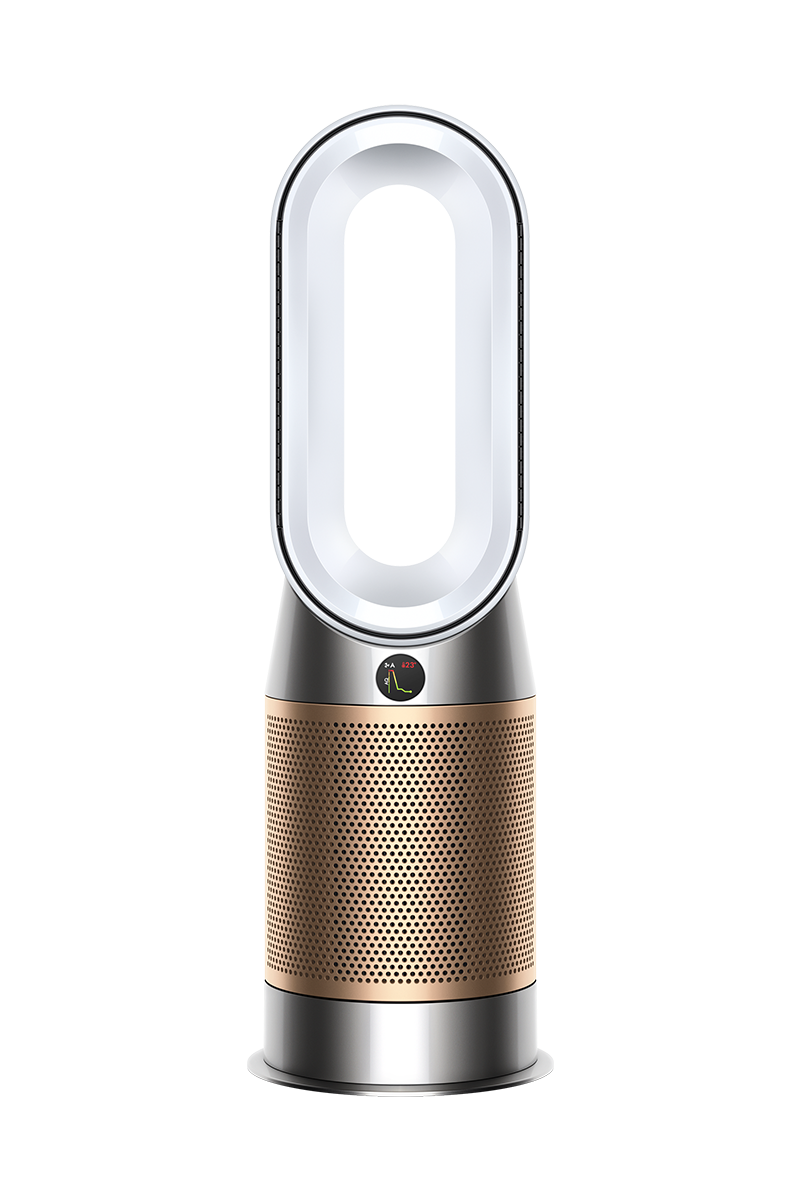
Dyson Purifier Hot+ Cool HP2 De-NOx (White/Gold)
-
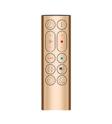
Remote Control
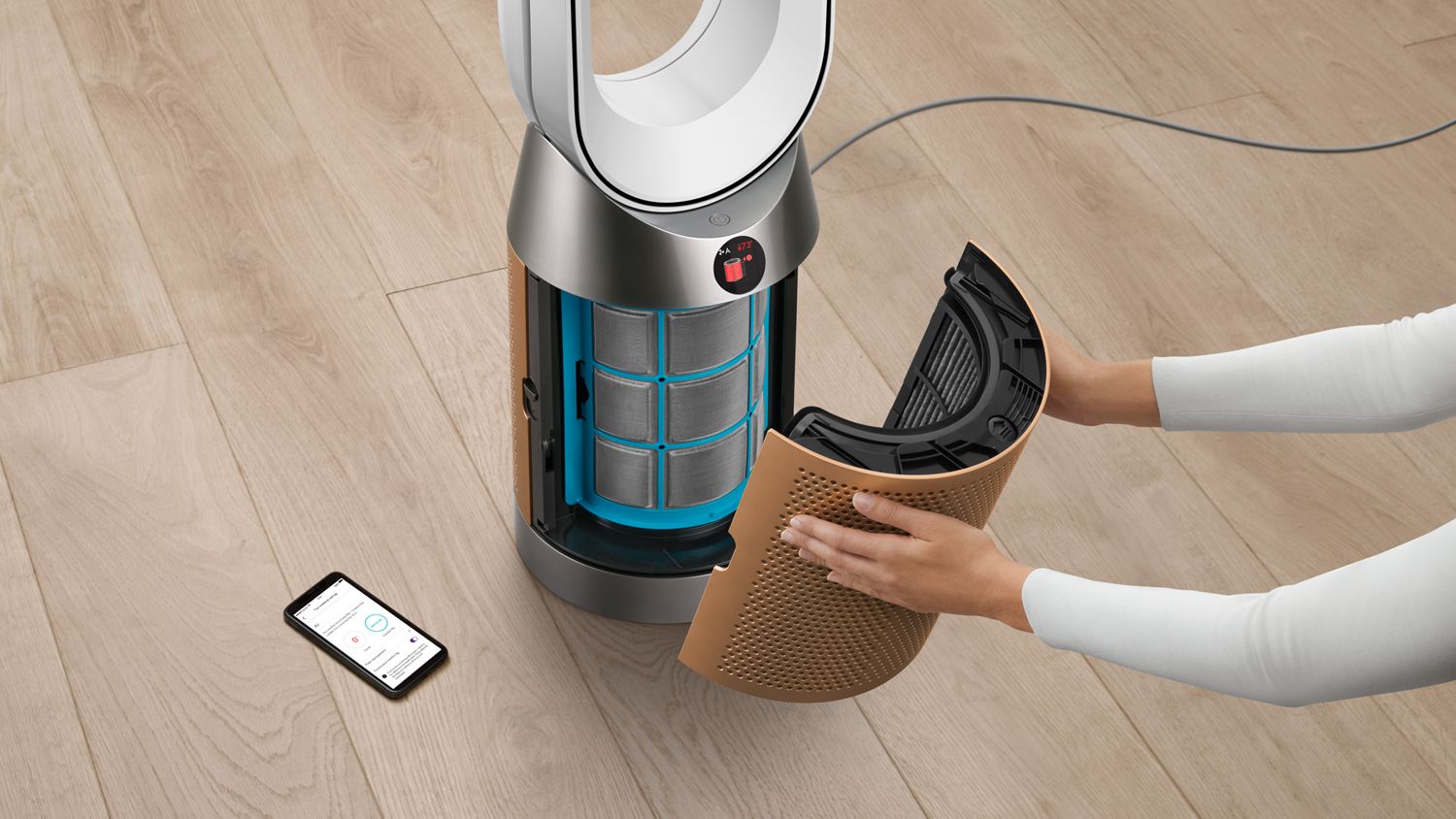
Curved and magnetized to store neatly on top of the machine.

-
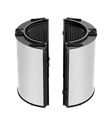
360° Combi HEPA + K-Carbon air purifier filter
Combined HEPA + K-Carbon filter

Even room heating and powerful cooling, with advanced air purification⁸
Heats your whole room in winter8 or cools you in summer.³ Captures dust, odors, and allergens* – for a healthier home environment.


Air pollution isn’t just outside – it’s inside too
This is a carousel with slides. Use Next and Previous buttons to navigate, or jump to a slide with the slide dots.
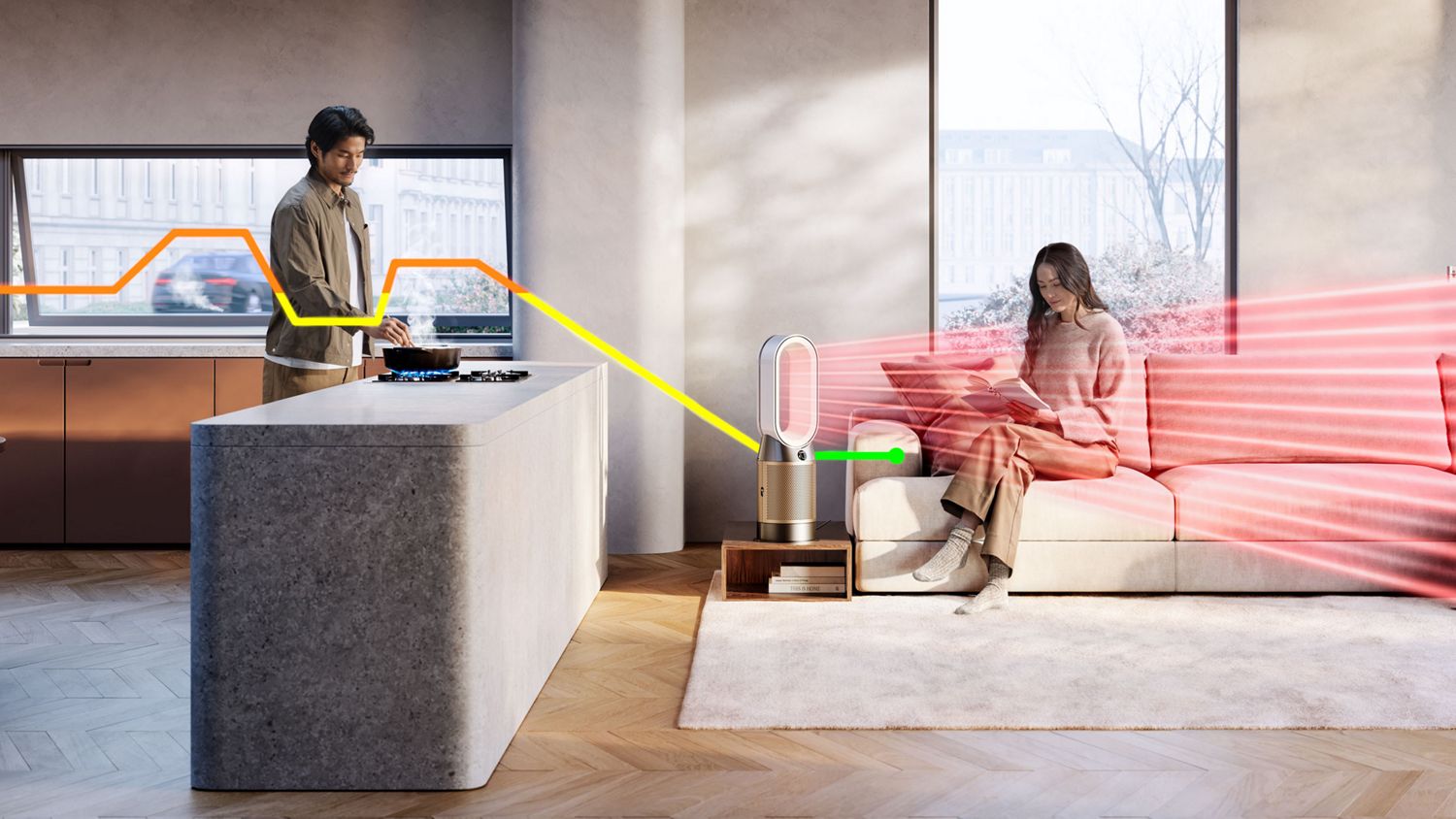
Cooking odours and NO₂
Cooking doesn’t just leave lingering odours. It can also release potentially harmful pollutants like NO₂ when any fuel is burned, which can build up in your home.

Cooking odours and NO₂
Cooking doesn’t just leave lingering odours. It can also release potentially harmful pollutants like NO₂ when any fuel is burned, which can build up in your home.
Pet odors and dander
Pets can bring unwanted odors and allergens* into the home. Dogs and cats shed dander, releasing microscopic skin and saliva into the air.
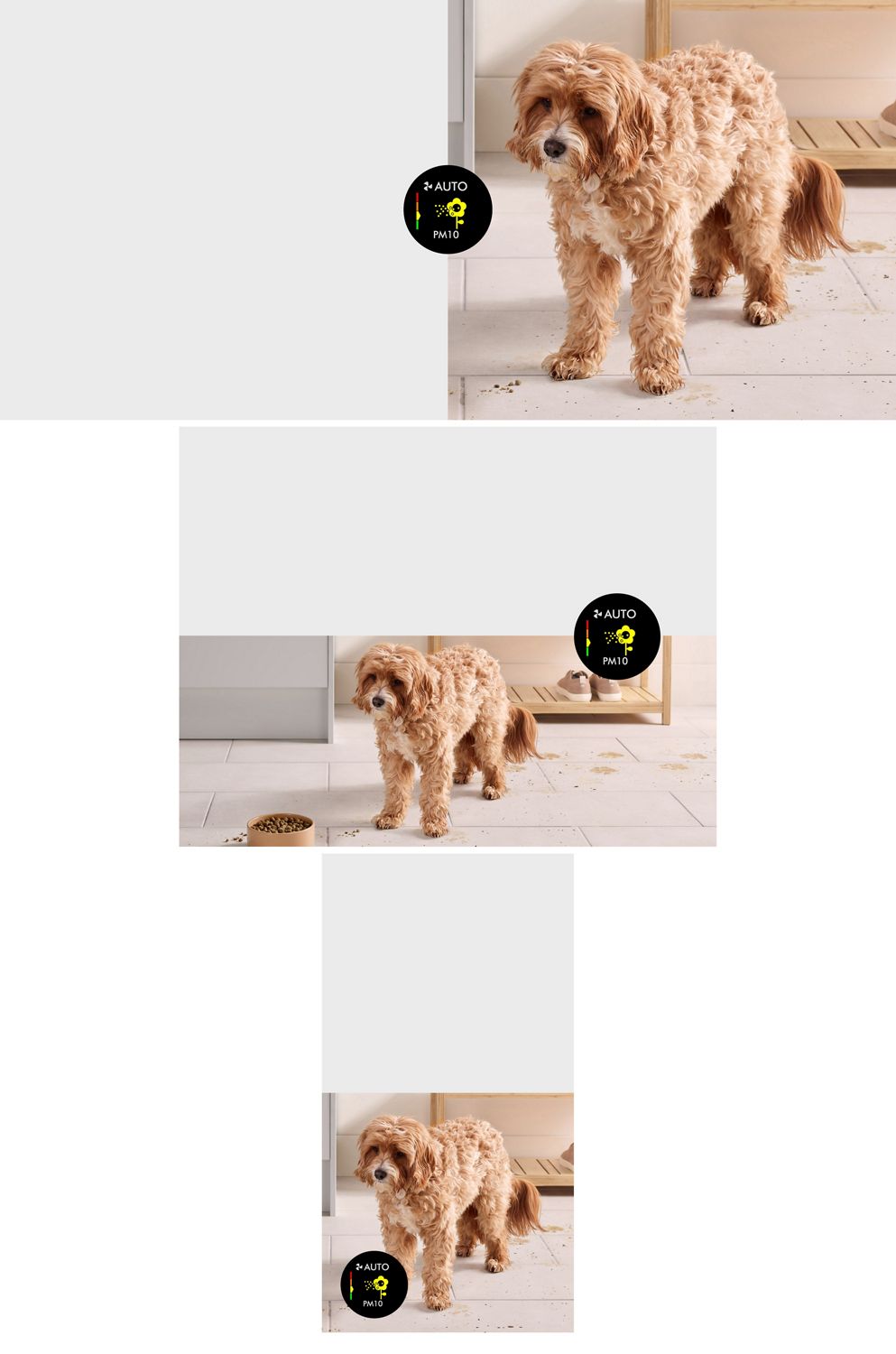
Pet odors and dander
Pets can bring unwanted odors and allergens* into the home. Dogs and cats shed dander, releasing microscopic skin and saliva into the air.
Allergens* such as pollen
Pollen season can make life difficult. Dyson purifiers reduce your exposure to allergens* like these, so you and your family can breathe cleaner air.
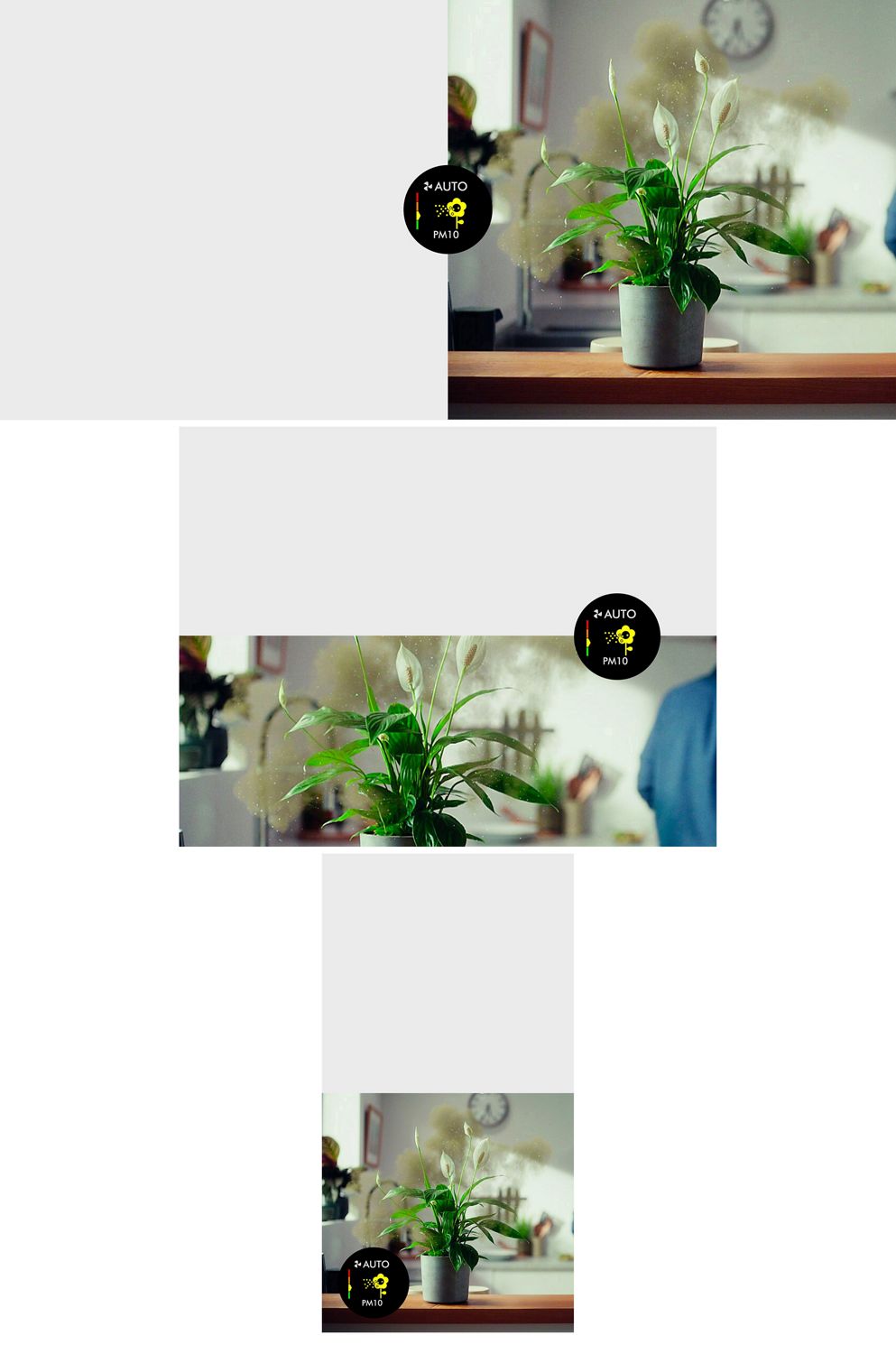
Allergens* such as pollen
Pollen season can make life difficult. Dyson purifiers reduce your exposure to allergens* like these, so you and your family can breathe cleaner air.
VOCs from cleaning products and aerosols
Some household products like disinfectants and aerosols can release potentially harmful gases into the air. These are known as volatile organic compounds (VOCs).
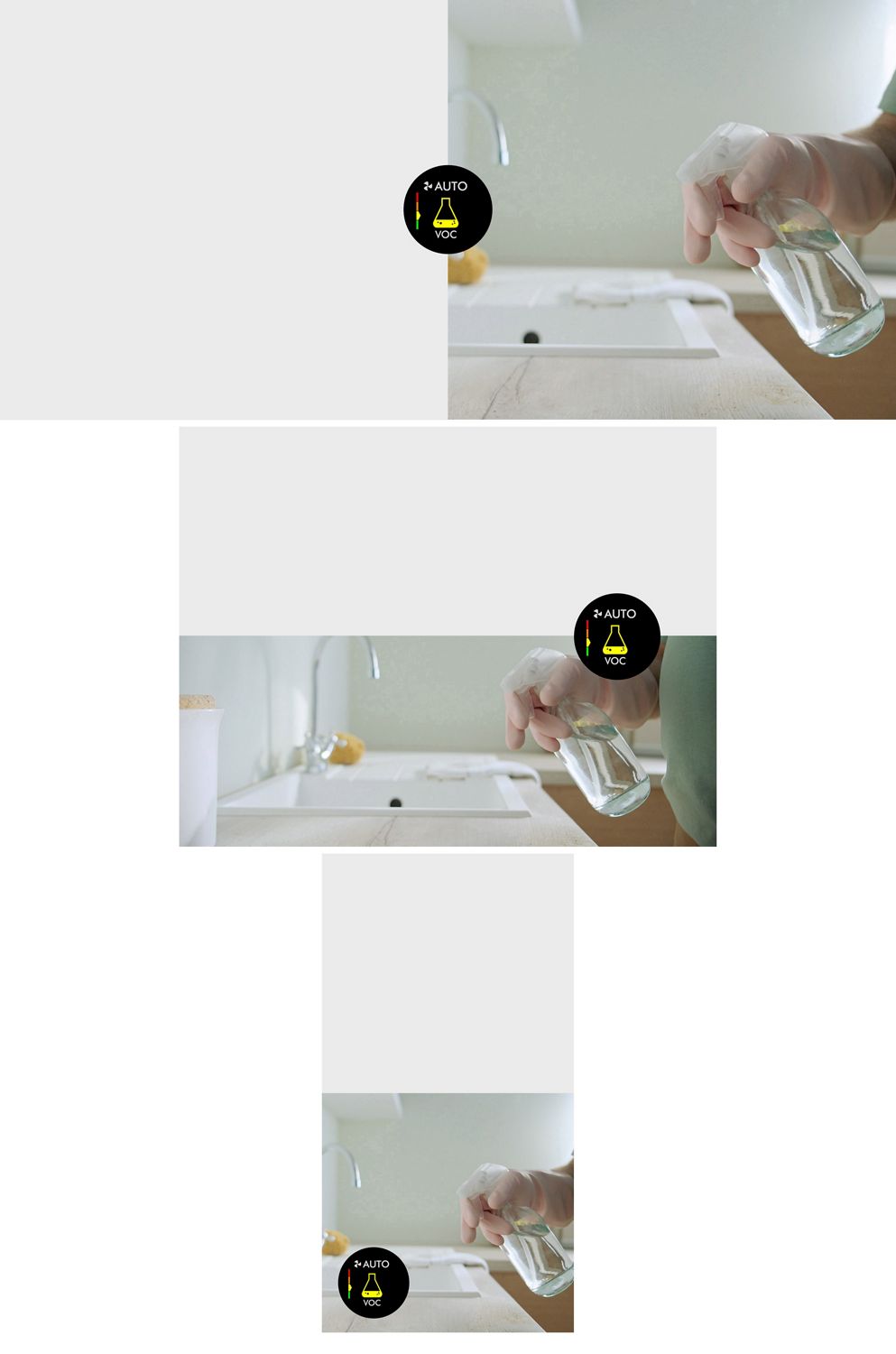
VOCs from cleaning products and aerosols
Some household products like disinfectants and aerosols can release potentially harmful gases into the air. These are known as volatile organic compounds (VOCs).
Key features
-
Heats in winter
With long-range projection, it’s quick to heat the whole room evenly.8
-
Cools you in summer
In warmer weather, a powerful stream of purified airflow can cool you down.³
-
Auto mode
In Auto mode, your purifier reacts automatically to remove pollutants, only using energy when needed.
-
Easy maintenance
Changing the HEPA+K-Carbon filter is quick and easy. The machine’s LCD screen and MyDyson™ app5 notifies you when it needs to be replaced.
-
Smart technology
The MyDyson™ app lets you monitor your home’s air quality from anywhere, set schedules, and more. Control hands-free, using compatible voice services.5
Discover the pioneering technology inside the machine
This is a carousel with slides. Use Next and Previous buttons to navigate, or jump to a slide with the slide dots.
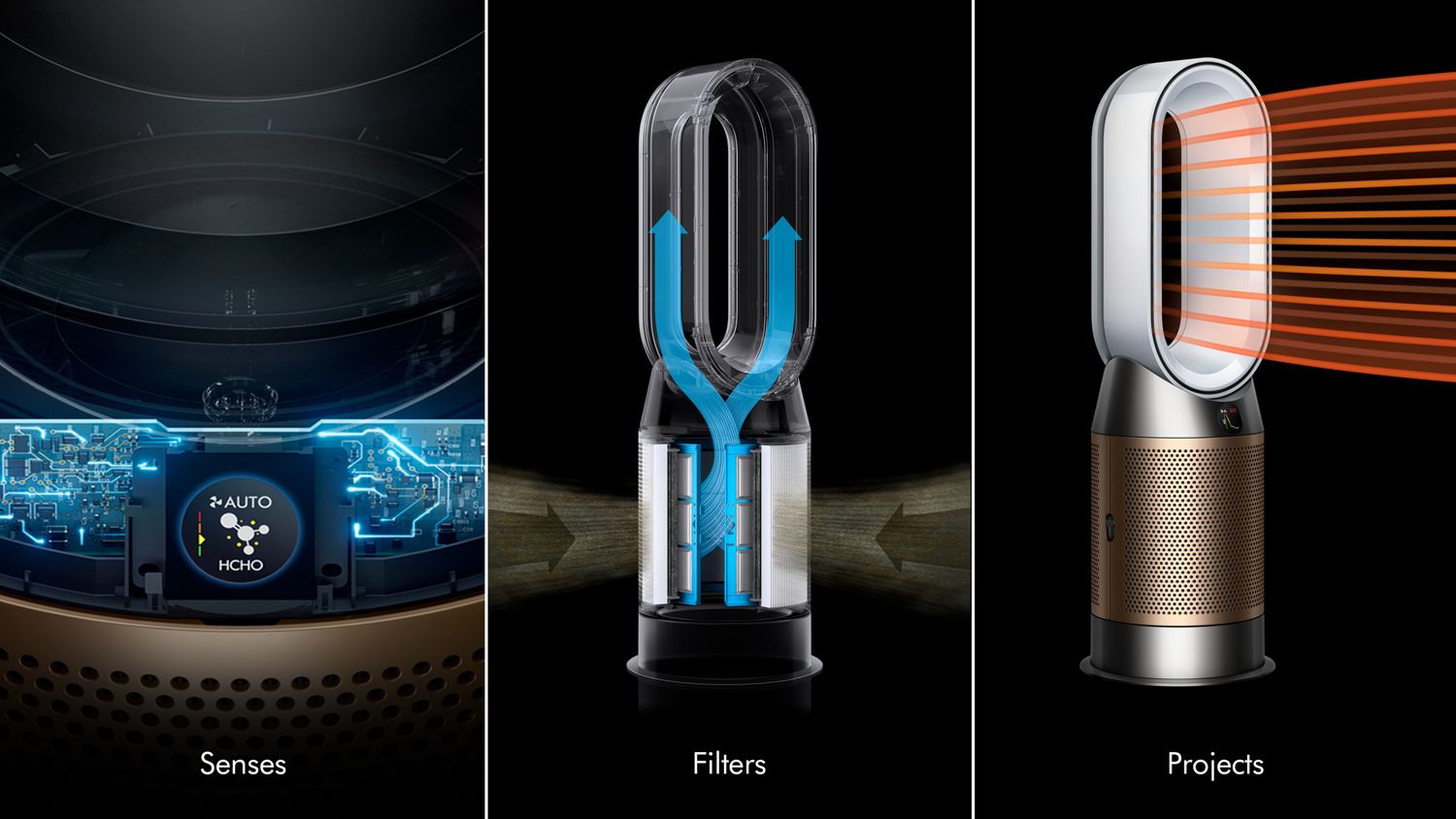
Senses
Integrated sensors constantly analyze your air, while our unique algorithm cross-checks data every second. It diagnoses pollutants at a molecular level, displaying live results on the LCD screen and in the MyDyson™ app.⁵
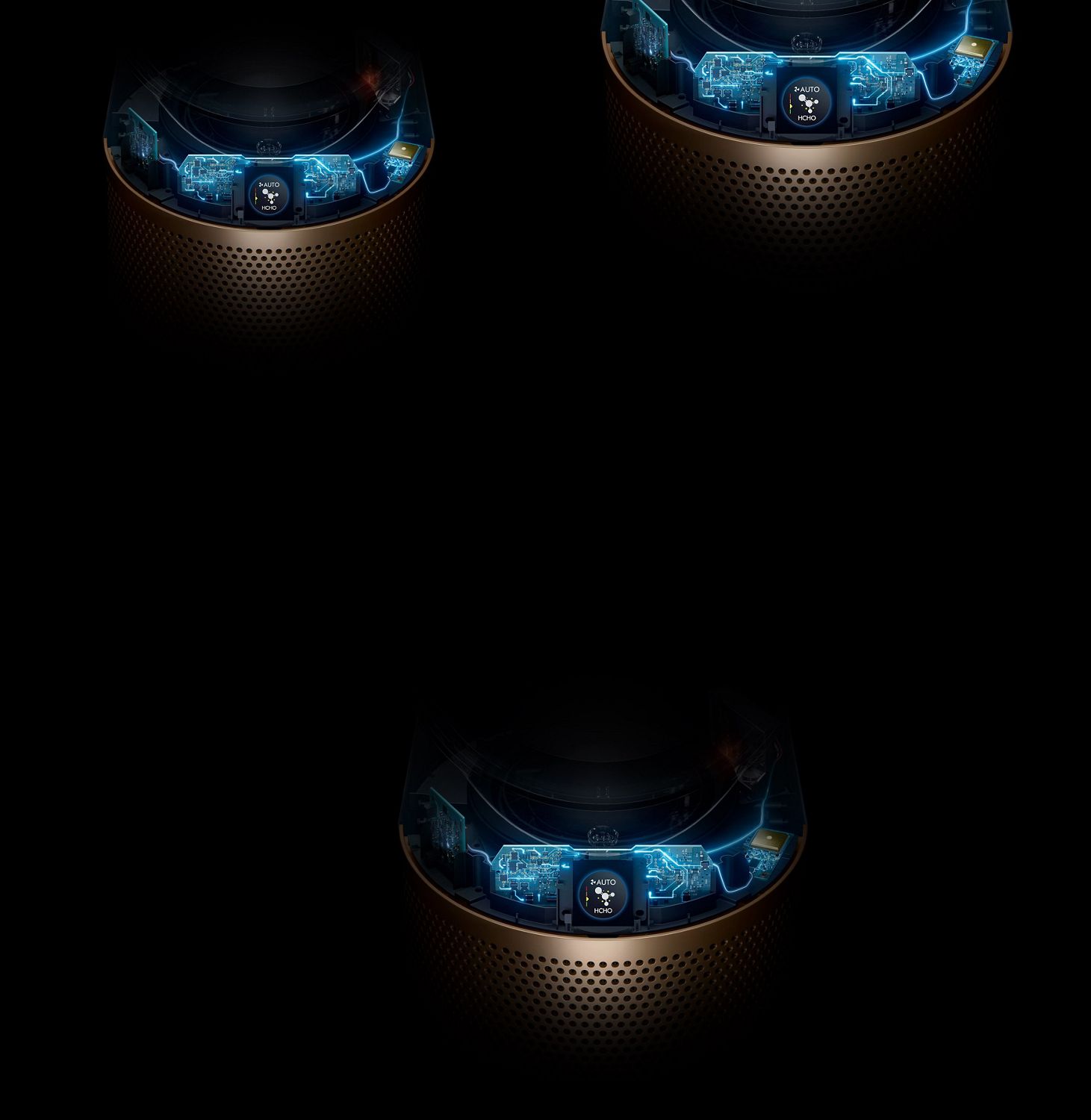
Senses
Integrated sensors constantly analyze your air, while our unique algorithm cross-checks data every second. It diagnoses pollutants at a molecular level, displaying live results on the LCD screen and in the MyDyson™ app.⁵
Filters
The fully-sealed, three-stage filtration system traps pollutants inside the machine. It captures 99.97% of particles as small as 0.3 microns, removes odors and gases2, and continuously destroys formaldehyde.⁺
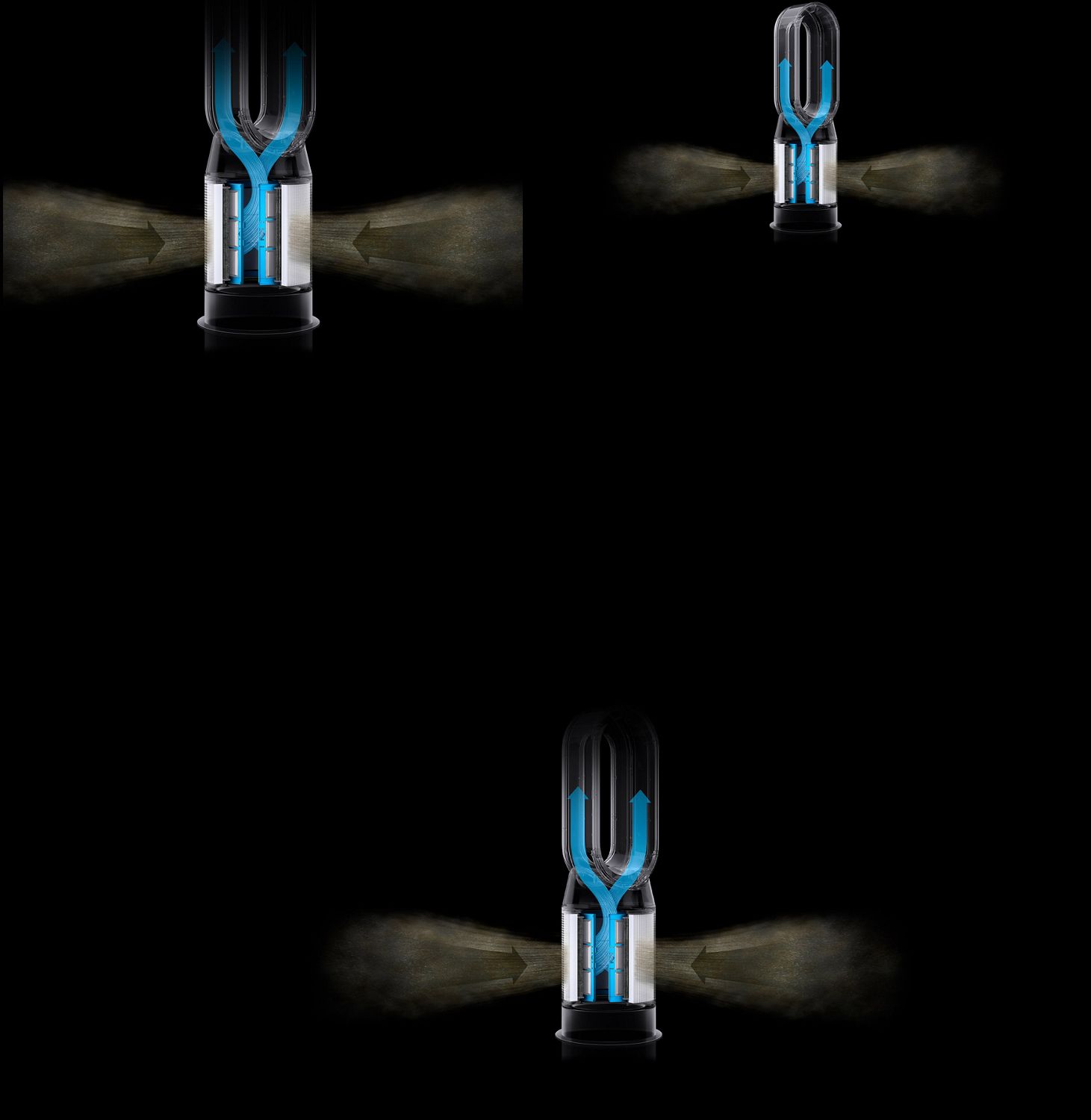
Filters
The fully-sealed, three-stage filtration system traps pollutants inside the machine. It captures 99.97% of particles as small as 0.3 microns, removes odors and gases2, and continuously destroys formaldehyde.⁺
Projects
Air Multiplier™ technology delivers over 76 gallons per second of smooth, yet powerful airflow.⁷ While 350° oscillation circulates purified air to heat the whole room evenly.⁸
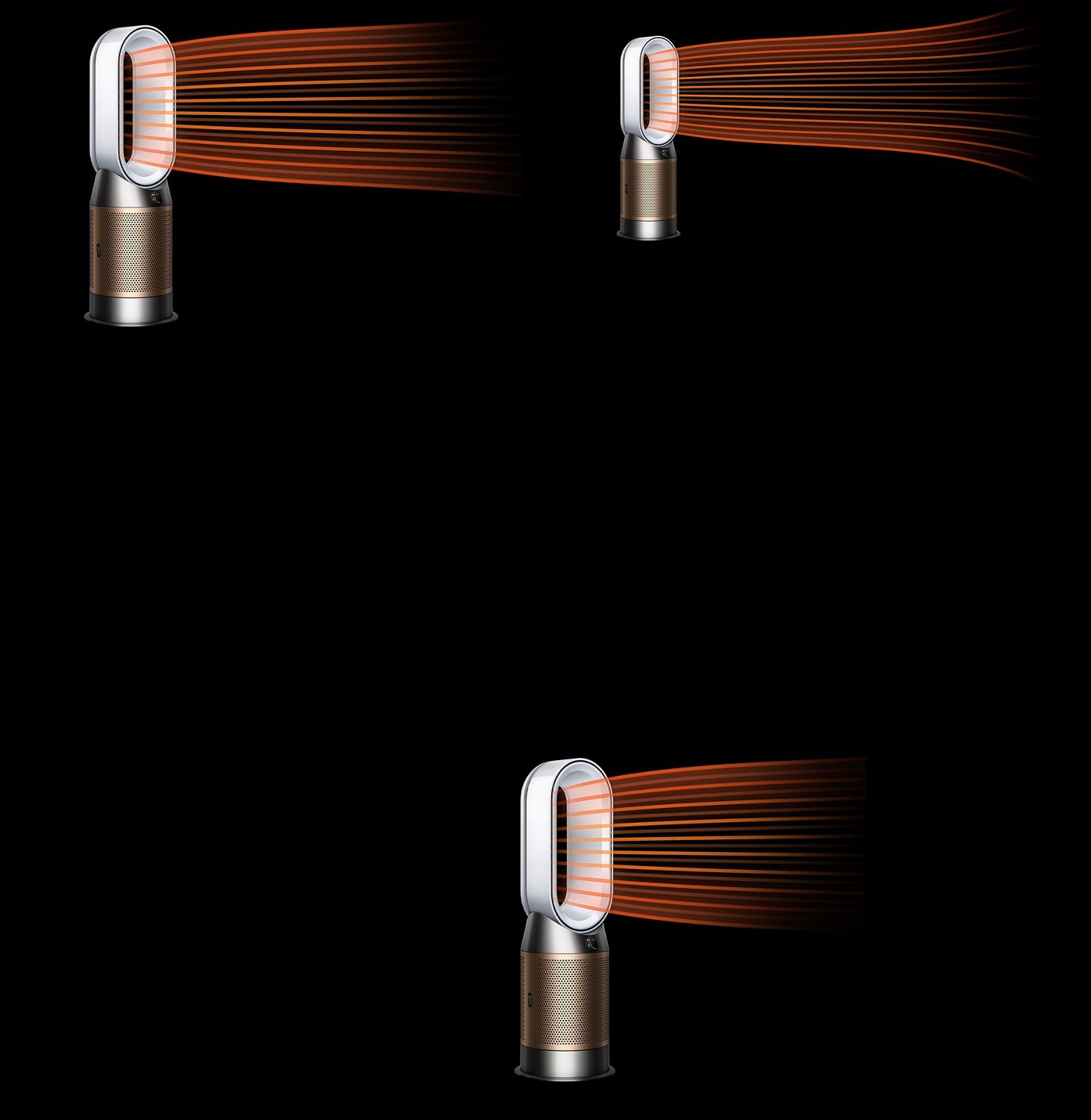
Projects
Air Multiplier™ technology delivers over 76 gallons per second of smooth, yet powerful airflow.⁷ While 350° oscillation circulates purified air to heat the whole room evenly.⁸

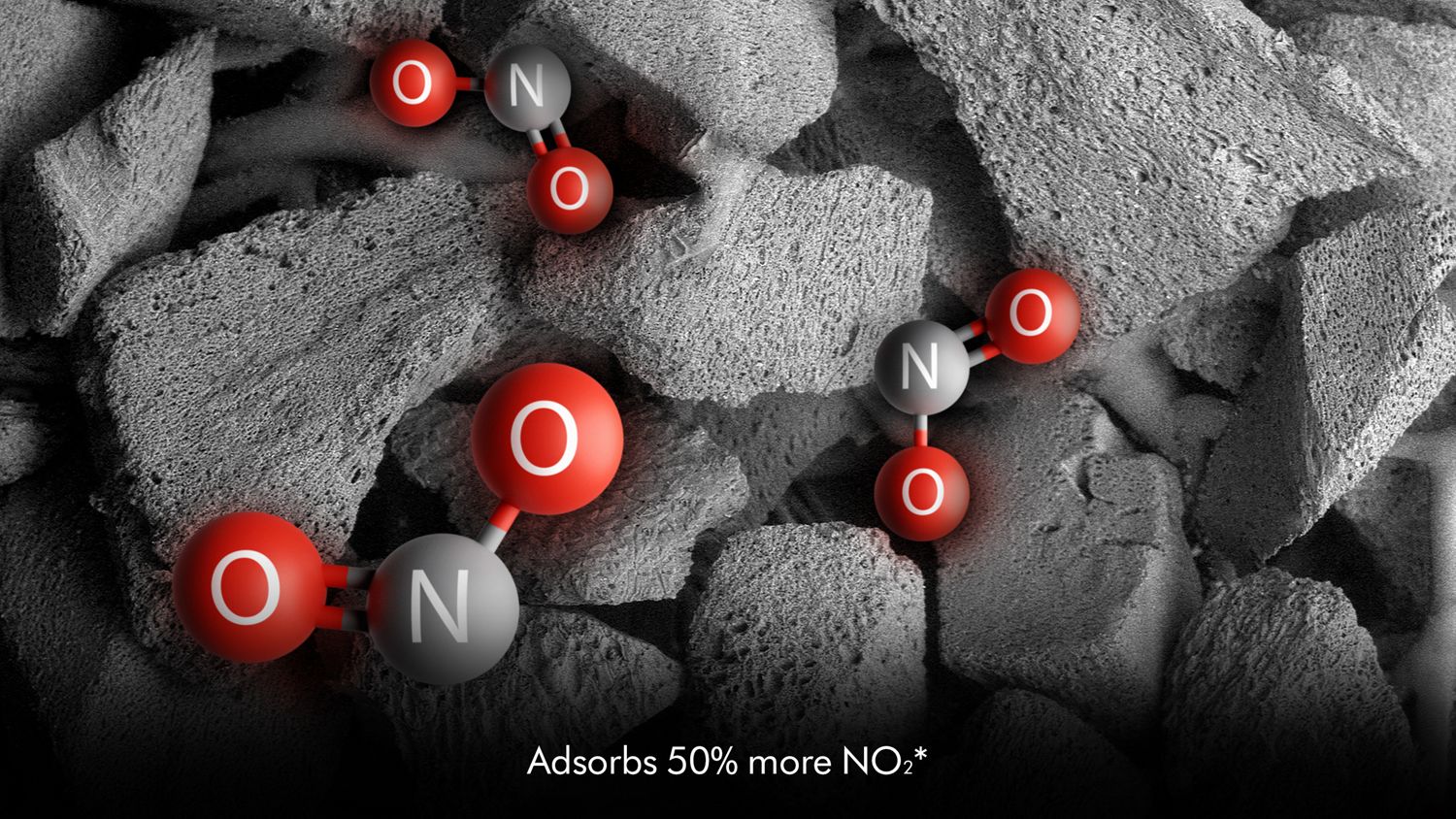
Adsorbs 50% more NO₂±
Our K-Carbon filter is impregnated with potassium carbonate (K₂CO₃) and can adsorb 50% more nitrogen dioxide – a common and potentially harmful household pollutant.±


-
App control
Adjust airflow speed, oscillation, and activate Sleep mode or Sleep timer – all from your phone, wherever you are.
-
Scheduling
Set a seven-day schedule for your machine to operate at specific times, day or night.
-
Data and insights
Explore live and historical data to monitor indoor environmental trends in your home.
-
Instant support
Helpful guides and assistance plus, a library of easy to follow how-to videos.
Frequently asked questions
Dyson Purifier Hot+Cool HP2 De-NOx has all of the capabilities found in our Dyson Purifier Hot+Cool Formaldehyde products but goes a step further to now capture more NO₂. The new K-Carbon filter is impregnated with potassium carbonate (K₂CO₃) and can adsorb 50% more nitrogen dioxide± – a common and potentially harmful household pollutant, produced by gas appliances, open flames, and wood burning stoves.
The formaldehyde-destroying catalytic filter never needs replacing. And we recommend replacing the HEPA+K-Carbon filter every 12 months19 (based on 12 hours a day of use) – so this may vary depending on usage and pollution levels. You’ll be notified via the MyDyson™ app5 or LCD screen when it’s time to replace the filter.
The heater is fitted with automatic cut-out switches that operate if the heater tips over or overheats. Additionally, there are no fast or loud spinning blades, and no visible heating elements.
-
Allergens
An allergen is a substance that can cause an allergic reaction by triggering the body’s immune system. Common indoor allergens include dust mite droppings, pet dander, mold, and pollen.
-
Bacteria
Microscopic, single-celled organisms that exist in their millions, in every environment. Not all bacteria are harmful, but some can have adverse effects, such as E. coli.
-
Benzene
Benzene is colourless, flammable liquid produced by both natural and man-made processes. It’s a natural part of crude oil, gasoline, and cigarette smoke. Indoors, it comes from products such as glues, paints, furniture wax, and detergents.
-
Carbon dioxide (CO₂)
A colourless greenhouse gas, which comes from the extraction and burning of fossil fuels. Increased CO₂ levels can impact cognitive function.
-
Formaldehyde
This colourless, flammable gas is used in some building materials and household products. Sources can include some fabrics found in flooring and furniture, glues, paints, varnishes, air fresheners, and household cleaners.
-
H1N1 virus
This subtype of Influenza A virus, also known as swine flu, caused a global flu outbreak. H1N1 produces respiratory infectious diseases in humans and pigs. Symptoms can be similar to seasonal flu.
-
HEPA 13
HEPA (High Efficiency Particulate Air) is an air filter efficiency standard and a measure of a filter’s performance. To achieve this standard, filters must meet a minimum of 99.97% particle removal at the most penetrating particle size.
-
Humidification
A process of increasing air moisture content through the addition of water vapour or steam. Humidifiers can add moisture to the air in dry conditions, creating a more comfortable indoor environment when needed.
-
Microns
Airborne particles are usually described in microns. One micron is equal to one-millionth of a metre. The human eye can see debris and dust that are approximately 25 microns in size.
-
Nitrogen dioxide (NO₂)
Nitrogen dioxide is a liquid below 21.2 °C and a gas at higher temperatures. It is toxic to humans in both states. Gas stoves and space heaters are the most common indoor sources of NO₂ emissions. Other sources include improperly vented furnaces and water heaters.
-
Pet dander
Pet dander is made up of tiny particles of skin, saliva and urine, shed by animals with fur or feathers. Pet dander lingers in the air before settling on surfaces such as furniture, bedding, and fabrics. Exposure to these airborne particles can trigger allergies.
-
Particulate matter (PM)
Particulate matter contains microscopic solids or liquid droplets, measured in microns. Indoor PM can be generated through many day-to-day activities such as cooking, cleaning, and the burning of candles and fires.
-
Purification
The process of making something free of any contaminants or physical impurities. Air purification is designed to filter the air in your home – removing pollutants such as dust, allergens and viruses.
-
Volatile organic compounds (VOCs)
Volatile organic compounds are potentially harmful gases found in many household products. Common sources include paints, varnishes, air fresheners, cosmetics, and cleaning products.
-
Pollen
Pollen is a powdery substance released from seed plants as part of their reproduction process. It typically appears from trees in the spring, grasses in the summer, and weeds in the autumn. Pollen grains are among the most common allergens.
-
House dust mites
Dust mites are tiny insects that commonly live in household dust. They are one of the biggest causes of allergies. Each gram of house dust contains approximately 1000 dust mites.
-
Aspergillus mold
A common name for a visible group of fungi, mould thrives wherever there is dampness – sending out millions of spores into the air. Exposure to mould occurs via inhalation, skin contact, or ingestion.




±Tested to Dyson test method TM-003387. In a 3 cubic metre test chamber, at fan speed 10, at third-party test laboratory (Fraunhofer WKI), comparison against regular activated carbon performance.
⁺Third party full machine testing based on GB/T 18801-2022 formaldehyde cumulative clean mass testing with continuous injection until plateau of formaldehyde CADR is achieved. Results may vary in practice.
*Allergens refer to non-living material.
¹ Tested for purification coverage in a 81m³ room (TM-003711) and heating performance in a 35m³ room (DTM-961).
2Tested per ISO 29463. Gas capture rates may vary.
³Fan; not air conditioning unit.
⁵Requires device to run app, Wi-Fi or mobile data, Bluetooth 4.0 support, and iOS version 10 or Android version 5 (or above). Standard data and messaging rates may apply. Refer to the MyDyson app for compatible voice services.
7Tested to DTM-801, in fan mode, at speed 10.
⁸Tested in maximum setting for air projection, tested in Auto mode for purification coverage, tested for room heating per relevant Dyson method DTM961.
⁹Particle challenge by DEHS oil specified in EN1822 within a chamber specified in ASTM F3150.
19Based on 12 hours use per day. Filter life varies according to pollution levels.

.png)