

Premium purification
This is a carousel with slides. Use Next and Previous buttons to navigate, or jump to a slide with the slide dots.
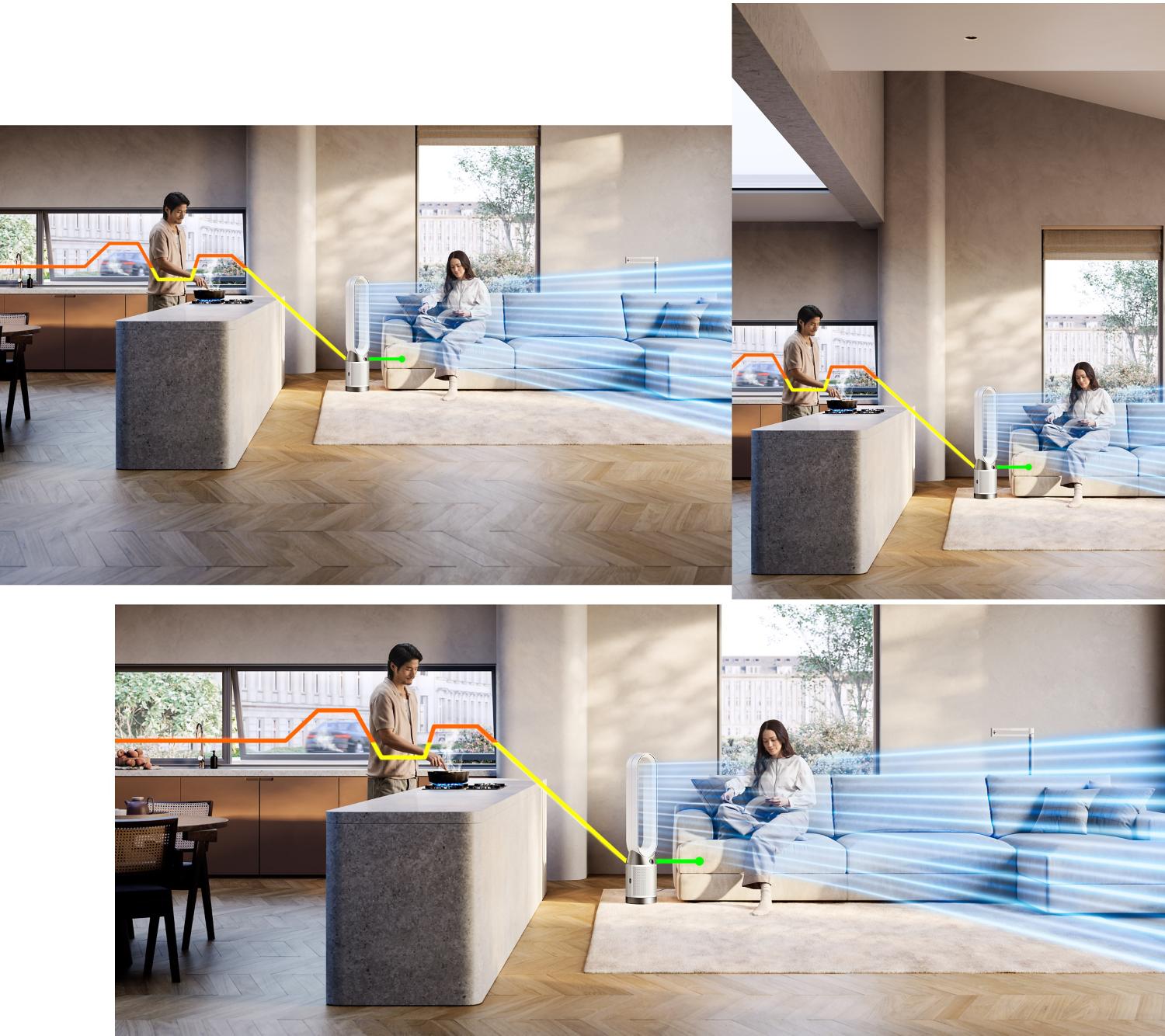
Senses and reacts
Integrated sensors analyze and diagnose airborne pollutants in real time, then reacts automatically to capture pollutants, only using energy when needed.
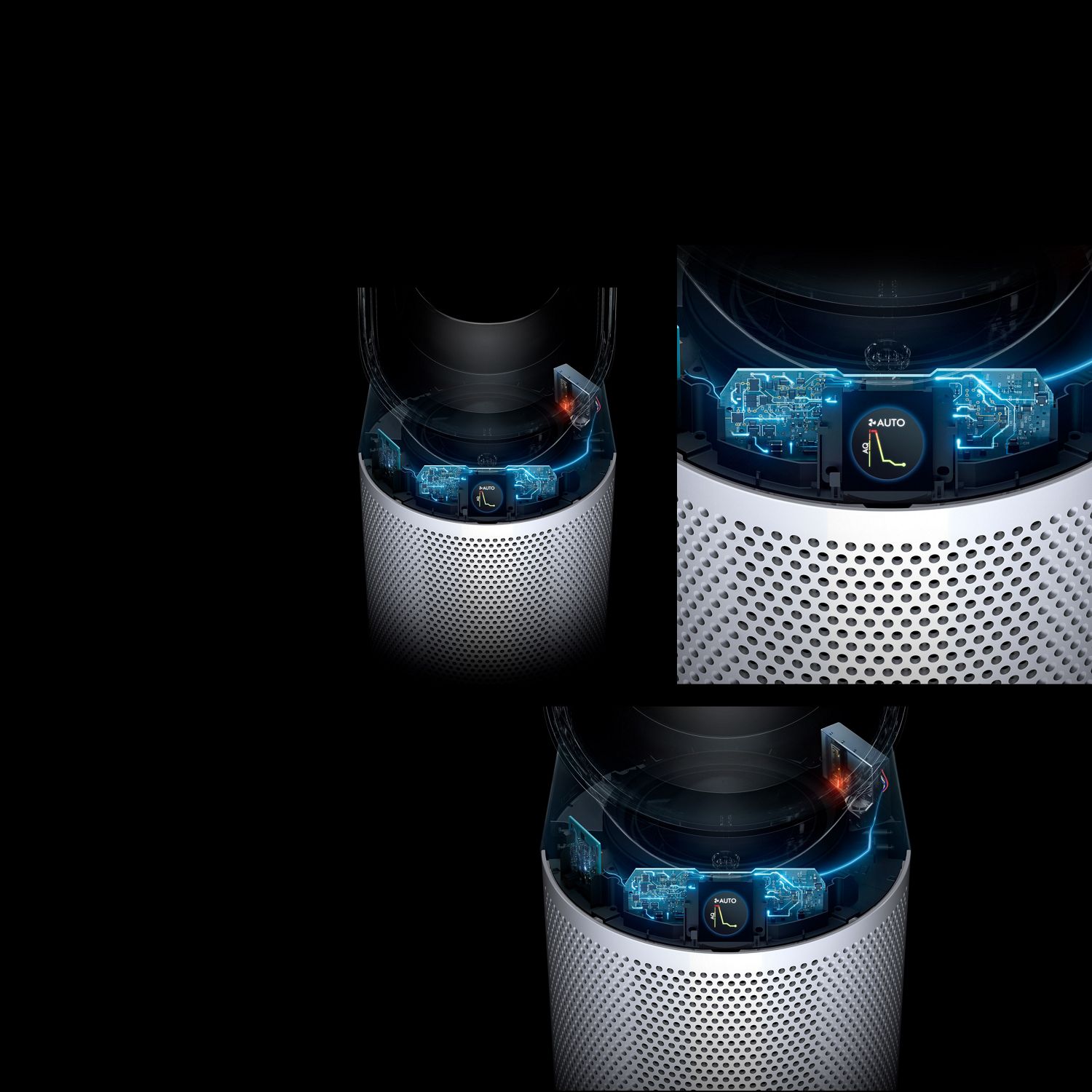
Senses and reacts
Integrated sensors analyze and diagnose airborne pollutants in real time, then reacts automatically to capture pollutants, only using energy when needed.
Captures gases and ultra fine particles
The HEPA H13 filter captures 99.97% of particles as small as 0.3 microns¹, while a layer of activated carbon removes odors and gases including VOCs.²
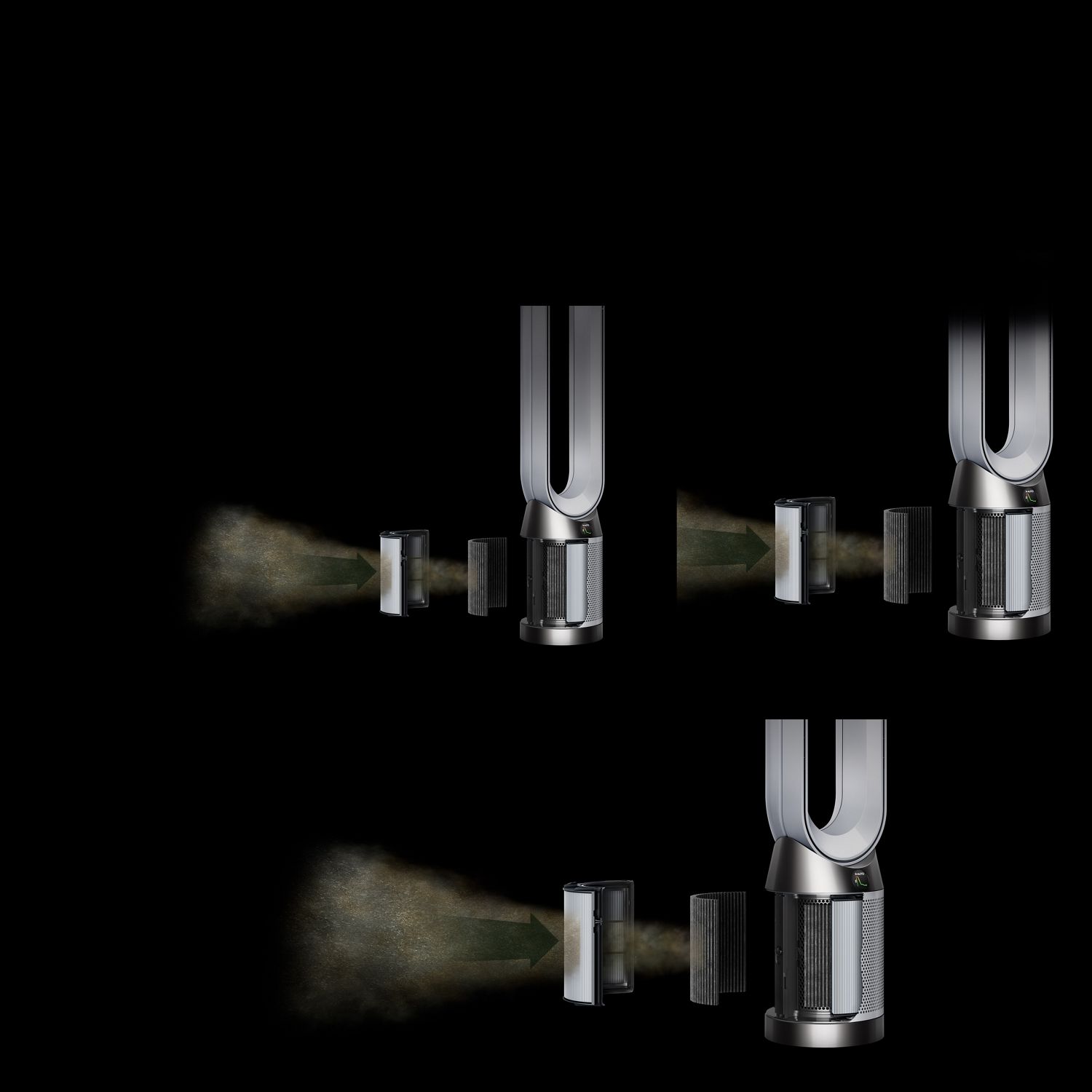
Captures gases and ultra fine particles
The HEPA H13 filter captures 99.97% of particles as small as 0.3 microns¹, while a layer of activated carbon removes odors and gases including VOCs.²
Air Multiplier™ technology
Combines principles used in turbochargers and jet engines to amplify airflow up to 15 times. For powerful, long-range projection to purify and cool you quickly.³
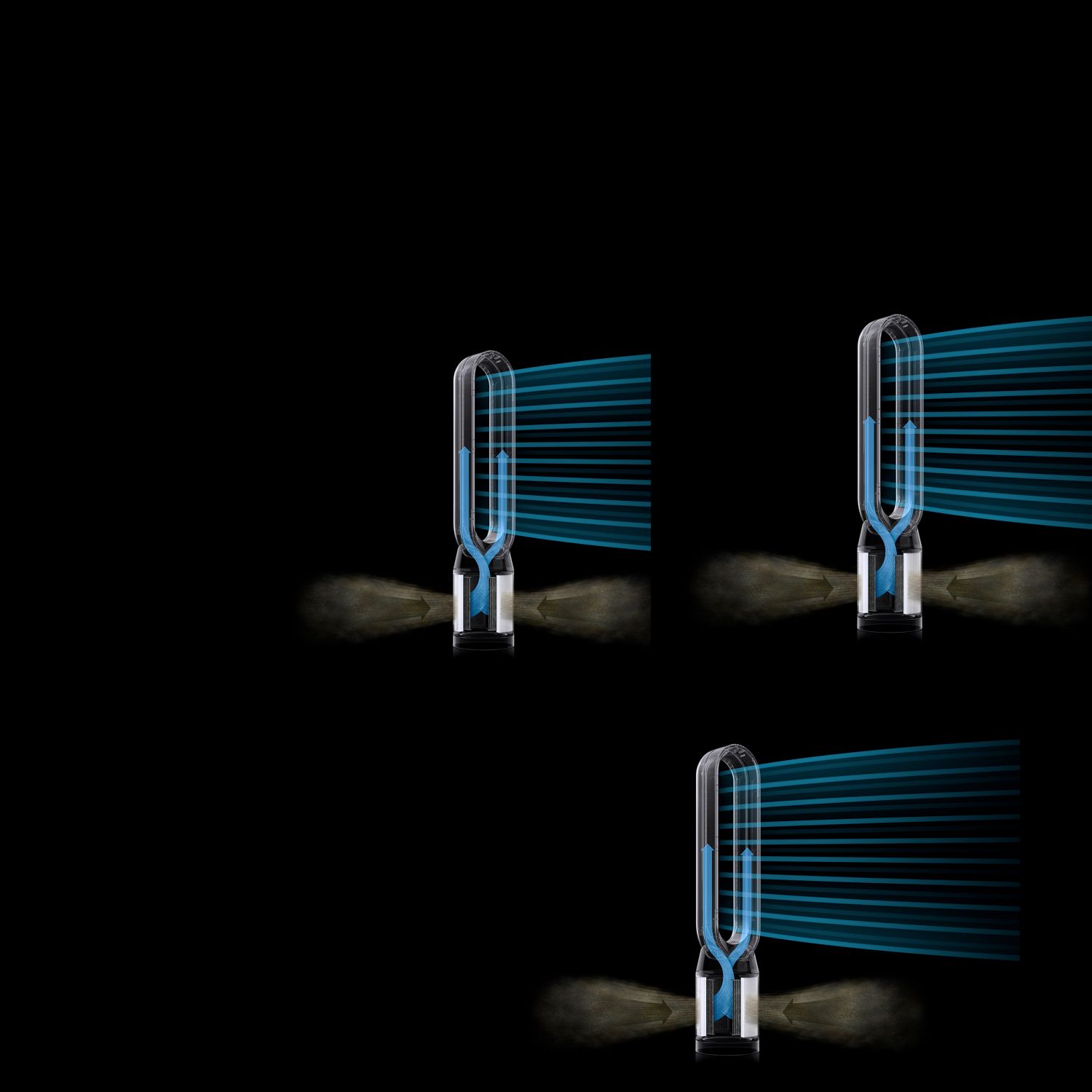
Air Multiplier™ technology
Combines principles used in turbochargers and jet engines to amplify airflow up to 15 times. For powerful, long-range projection to purify and cool you quickly.³
Control your air quality, anywhere
The MyDyson™ app lets you see which pollutants have been captured, set schedules and more. Control hands-free, using compatible voice services such as Amazon Alexa, Google Assistant or Siri.⁵
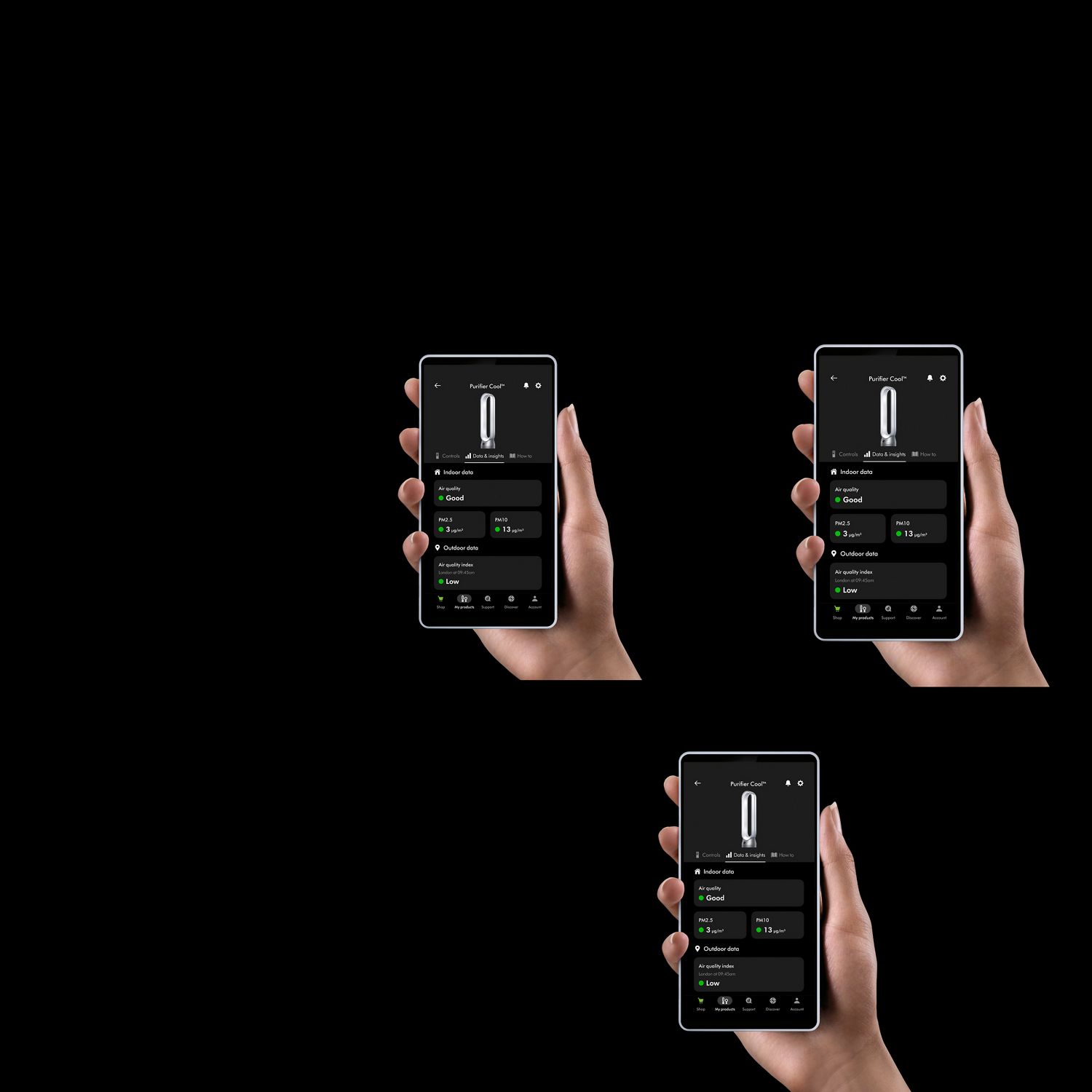
Control your air quality, anywhere
The MyDyson™ app lets you see which pollutants have been captured, set schedules and more. Control hands-free, using compatible voice services such as Amazon Alexa, Google Assistant or Siri.⁵


Frequently asked questions
The Dyson Purifier Cool PC1 has some of the same core capabilities found in our other purification machines. The air purifier fan can capture a wide range of particles and VOCs2, including PM2.5 and PM10.
The machine also benefits from app connectivity. Pairing your device with the MyDyson™ app lets you monitor your home’s air quality from anywhere, set schedules, and more.⁴
Connecting your Dyson Purifier Cool PC1 to the MyDyson™ app gives you enhanced control and monitoring capabilities.5 The app lets you monitor your home’s air quality, past and present, and gives you monthly personalized reports.
Get quick and easy support, plus helpful reminders such as when it’s time to replace the filter.
Using the MyDyson™ app also gives you full remote control, even when you’re not at home. Manage airflow speed adjustment, sleep timers, automated scheduling and even app-only features such as selecting your machine’s oscillation angle and its focal point.
Connecting to the app helps maintain a healthier home. And gives you complete control, wherever you are.
Connecting your machine to the MyDyson™ app means you can control your purifier without lifting a finger. Using your smart purifier is even quicker and easier with a compatible voice service such as Amazon Alexa, Google Assistant or Siri.⁵
Developed for iOS and Android, the MyDyson™ app gives you access to air quality data inside your home, and external air quality data for a chosen location.
Wi-Fi and Bluetooth® wireless technology enabled, it allows for voice control, scheduling, product warranty registration and product support.
-
Allergens
An allergen is a substance that can cause an allergic reaction by triggering the body’s immune system. Common indoor allergens include dust mite droppings, pet dander, mold, and pollen.
-
Bacteria
Microscopic, single-celled organisms that exist in their millions, in every environment. Not all bacteria are harmful, but some can have adverse effects, such as E. coli.
-
Benzene
Benzene is colourless, flammable liquid produced by both natural and man-made processes. It’s a natural part of crude oil, gasoline, and cigarette smoke. Indoors, it comes from products such as glues, paints, furniture wax, and detergents.
-
Carbon dioxide (CO₂)
A colourless greenhouse gas, which comes from the extraction and burning of fossil fuels. Increased CO₂ levels can impact cognitive function.
-
Formaldehyde
This colourless, flammable gas is used in some building materials and household products. Sources can include some fabrics found in flooring and furniture, glues, paints, varnishes, air fresheners, and household cleaners.
-
H1N1 virus
This subtype of Influenza A virus, also known as swine flu, caused a global flu outbreak. H1N1 produces respiratory infectious diseases in humans and pigs. Symptoms can be similar to seasonal flu.
-
HEPA 13
HEPA (High Efficiency Particulate Air) is an air filter efficiency standard and a measure of a filter’s performance. To achieve this standard, filters must meet a minimum of 99.97% particle removal at the most penetrating particle size.
-
Humidification
A process of increasing air moisture content through the addition of water vapour or steam. Humidifiers can add moisture to the air in dry conditions, creating a more comfortable indoor environment when needed.
-
Microns
Airborne particles are usually described in microns. One micron is equal to one-millionth of a metre. The human eye can see debris and dust that are approximately 25 microns in size.
-
Nitrogen dioxide (NO₂)
Nitrogen dioxide is a liquid below 21.2 °C and a gas at higher temperatures. It is toxic to humans in both states. Gas stoves and space heaters are the most common indoor sources of NO₂ emissions. Other sources include improperly vented furnaces and water heaters.
-
Pet dander
Pet dander is made up of tiny particles of skin, saliva and urine, shed by animals with fur or feathers. Pet dander lingers in the air before settling on surfaces such as furniture, bedding, and fabrics. Exposure to these airborne particles can trigger allergies.
-
Particulate matter (PM)
Particulate matter contains microscopic solids or liquid droplets, measured in microns. Indoor PM can be generated through many day-to-day activities such as cooking, cleaning, and the burning of candles and fires.
-
Purification
The process of making something free of any contaminants or physical impurities. Air purification is designed to filter the air in your home – removing pollutants such as dust, allergens and viruses.
-
Volatile organic compounds (VOCs)
Volatile organic compounds are potentially harmful gases found in many household products. Common sources include paints, varnishes, air fresheners, cosmetics, and cleaning products.
-
Pollen
Pollen is a powdery substance released from seed plants as part of their reproduction process. It typically appears from trees in the spring, grasses in the summer, and weeds in the autumn. Pollen grains are among the most common allergens.
-
House dust mites
Dust mites are tiny insects that commonly live in household dust. They are one of the biggest causes of allergies. Each gram of house dust contains approximately 1000 dust mites.
-
Aspergillus mold
A common name for a visible group of fungi, mould thrives wherever there is dampness – sending out millions of spores into the air. Exposure to mould occurs via inhalation, skin contact, or ingestion.


.png "Flexible payment options")





²Tested per ISO 29463. Gas capture rates may vary.
³Fan; not air conditioning unit.
⁵Requires device to run app, Wi-Fi or mobile data, Bluetooth 4.0 support, and iOS version 10 or Android version 5 (or above). Standard data and messaging rates may apply. Refer to the MyDyson app for compatible voice services.
7Tested to DTM-801, in fan mode, at speed 10.
⁸Tested in maximum setting for air projection, tested in Auto mode for purification coverage.
⁹Particle challenge by DEHS oil specified in EN1822 within a chamber specified in ASTM F3150.

.png)